
Identification
Have you actually got bed bugs?
Before treatment is even a question, most people need to answer a simpler one: is this a bed bug? This page explains what to look for, where to look and what evidence is worth capturing.
 Illustrative image
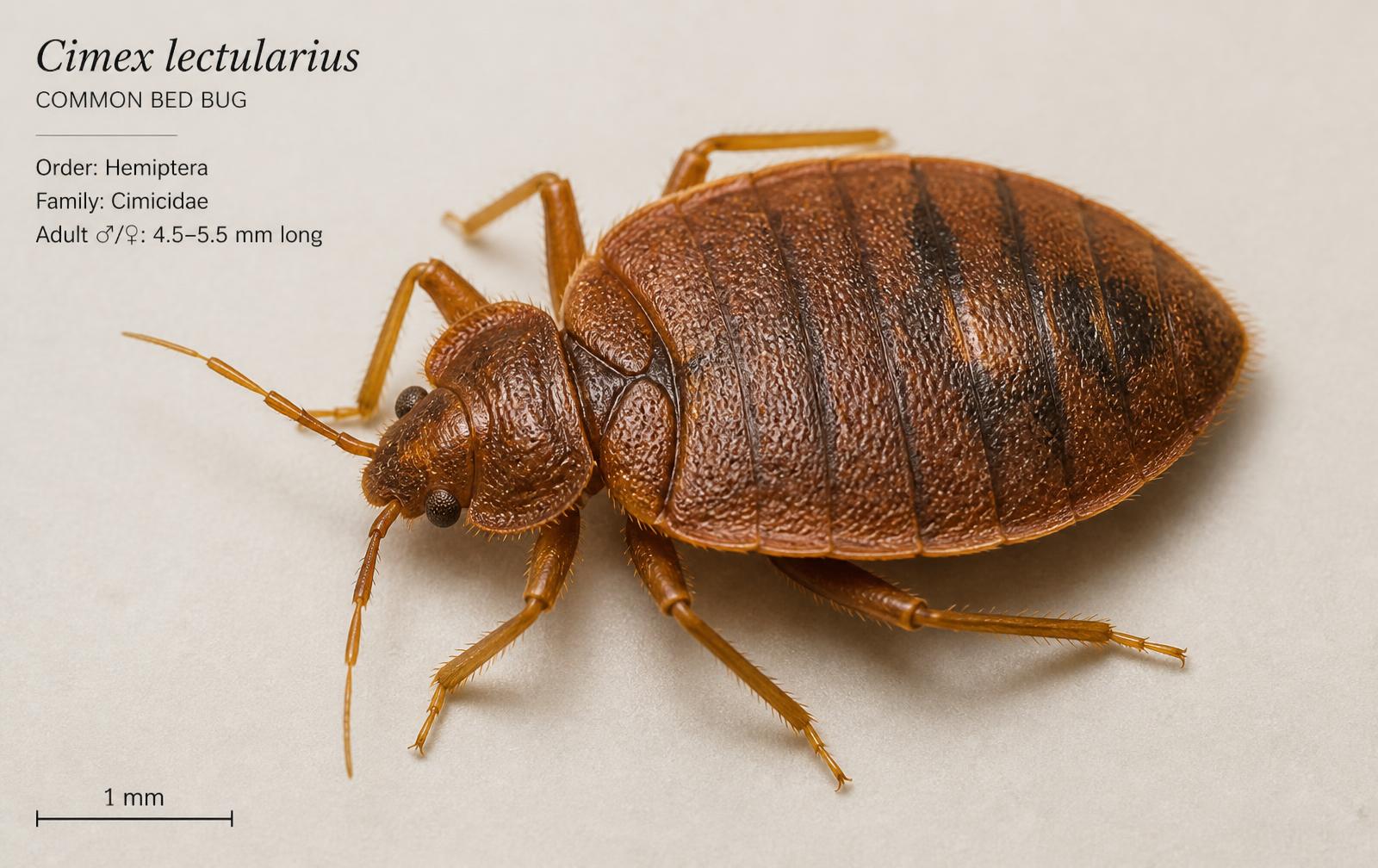
What an adult bed bug looks like
An adult bed bug is small, flat and oval, roughly 4–5mm long and reddish-brown. It is visible without a magnifier, but it spends most of its time out of sight in tight dark crevices close to where people sleep. That is why a property can have an established population before anyone sees a single insect.
Younger bed bugs are smaller and much paler, and the eggs are smaller still. If you are finding several sizes, that generally points to a breeding population rather than a single insect brought in on luggage.
Signs
The signs worth looking for
Work through these in order and use a torch. Most useful evidence is found within a metre or two of where somebody sleeps.
Adult bed bugs
Adults are small flat oval insects, roughly 4–5mm long — about the size of an apple pip — and reddish-brown. They are visible to the naked eye but they hide in cracks and seams, so people often live with an infestation for weeks before seeing one.
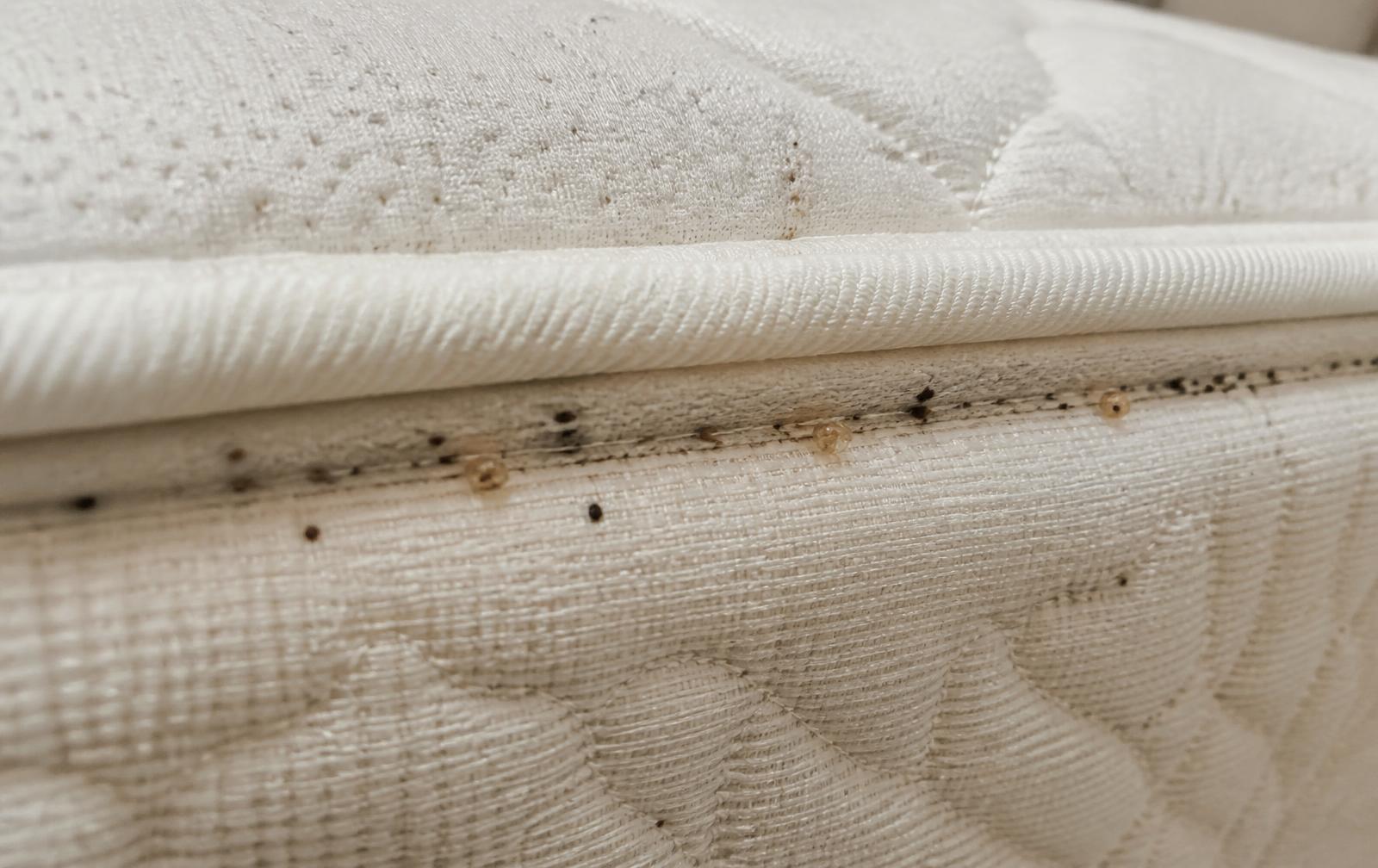
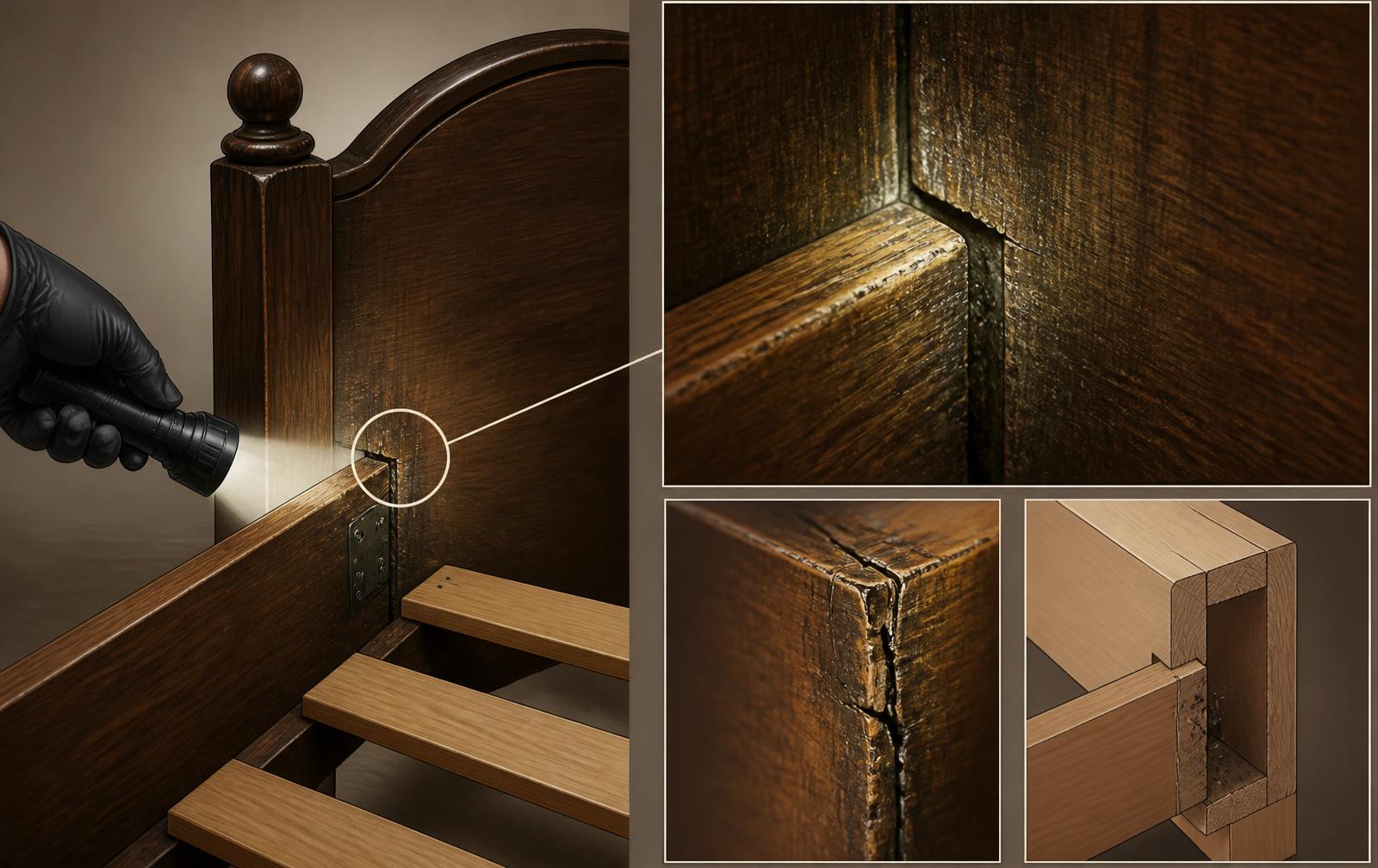
Where to look: Mattress seams, bed frame joints, headboard fixings, behind loose skirting.
Nymphs (young bed bugs)
Young bed bugs are much smaller and far paler — almost translucent when they have not fed — which is why they are easily missed or mistaken for something else. Their presence indicates breeding rather than a single introduced insect.
Where to look: The same harbourages as adults, often deeper into crevices.
Eggs
Eggs are tiny, pale and often stuck in place in a crevice. They are difficult to see without a torch and close inspection, and they are one of the reasons a treatment has to reach the whole harbourage rather than only the surface.
Where to look: Seams, joints, screw holes, fabric folds.
Faecal spotting
Small dark spots — like a fine felt-tip mark that has bled slightly into fabric — are one of the most commonly noticed signs. Spotting tends to cluster where bed bugs rest rather than being spread evenly.
Where to look: Mattress piping, sheets, bed base, wall behind the headboard.
Cast skins
Bed bugs shed their skin as they grow, leaving pale empty shells that keep the insect's shape. Finding cast skins suggests a population that has been present long enough to develop.
Where to look: Mattress seams, under-bed storage, corners of the bed base.
Harbourages
Bed bugs shelter close to where people sleep or sit still for long periods, in tight dark spaces they can grip on both sides. Understanding harbourages is what makes an inspection useful — an insect on the carpet is not where the population lives.
Where to look: Bed frames, headboards, divans, sofas, bedside furniture, seams and joints.
How activity spreads
Bed bugs typically spread outwards from the sleeping area and can be moved around a property on bedding, clothing and furniture. Moving belongings into an untreated room, a car or another property is one of the most common ways a localised problem becomes a larger one.
Where to look: Adjoining rooms, other bedrooms, living-room seating.
Flats and shared buildings
In flats and shared buildings, activity can be connected to neighbouring dwellings. That does not mean your treatment cannot succeed, but it does affect planning, and it is one of the circumstances the guarantee conditions address.
Where to look: Adjoining walls, service voids, shared corridors.
 Illustrative image
 Illustrative image
Important
Bites are not confirmation
Bites alone are not reliable confirmation of bed bugs. People react to bites very differently, some people do not react at all, and several unrelated causes produce similar marks. We will not tell you that you have bed bugs on the basis of a bite pattern, a description or a low-quality photograph.
Carpet beetle larvae
Small, hairy and often found in fabrics and floor edges. Frequently reported to us as suspected bed bugs.
Fleas
Associated with pets, and behave differently. Bites and evidence patterns are not the same.
Booklice and other small household insects
Often noticed in damp or undisturbed areas and mistaken for young bed bugs.
Skin reactions with another cause
Marks on the skin can have many causes unconnected with insects. A medical opinion is a medical matter, not evidence of an infestation in the property.
We do not diagnose a property remotely. What we can do is look at the evidence you send, tell you honestly whether it looks like something we should inspect further, and explain what treatment would involve if it is confirmed.
Evidence
What to photograph before you contact us
Good evidence shortens every conversation that follows. If you can capture these, send them with your treatment request.
- The insect itself, in focus and close up, next to something for scale if you can
- Mattress seams and piping, all the way round
- The bed base and each joint of the bed frame
- The headboard and its fixings, and the wall behind it
- Any spotting on bedding, the base or the wall
- Bedside furniture and any under-bed storage
- A wider shot of the room so we can see the layout
Prefer email? Write to enquiries@bedbugheatexpertsuk.co.uk. Evidence sent through the treatment request is stored privately and is never published without your permission.