

They creep in the day and bite in the night
The Halloween guest you definitely do not want in your bed: how to recognise possible bed bug evidence without panic, guesswork or bite-based diagnosis.
When fiction meets fact
October brings darker evenings, colder nights and Halloween. Plastic spiders appear in windows, bats decorate shopfronts and creepy-crawlies turn up everywhere — but one small insect can be an unwelcome presence at any time of year.
Bed bugs are not an October phenomenon. They live indoors and can be encountered year-round. The seasonal setting may be playful; the identification advice should remain careful and evidence-led.
Look for evidence
The real nightmare hiding in the bedroom
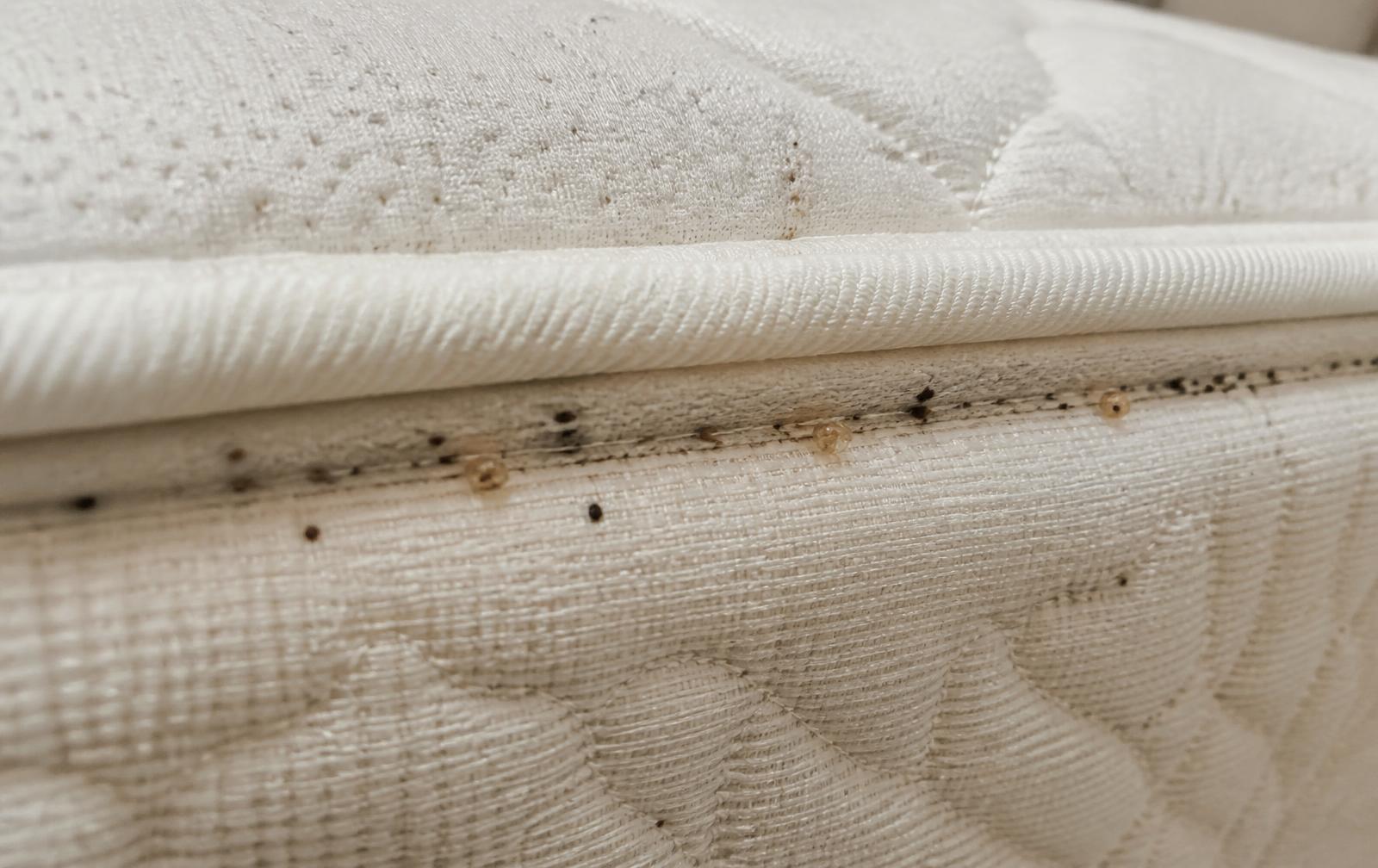

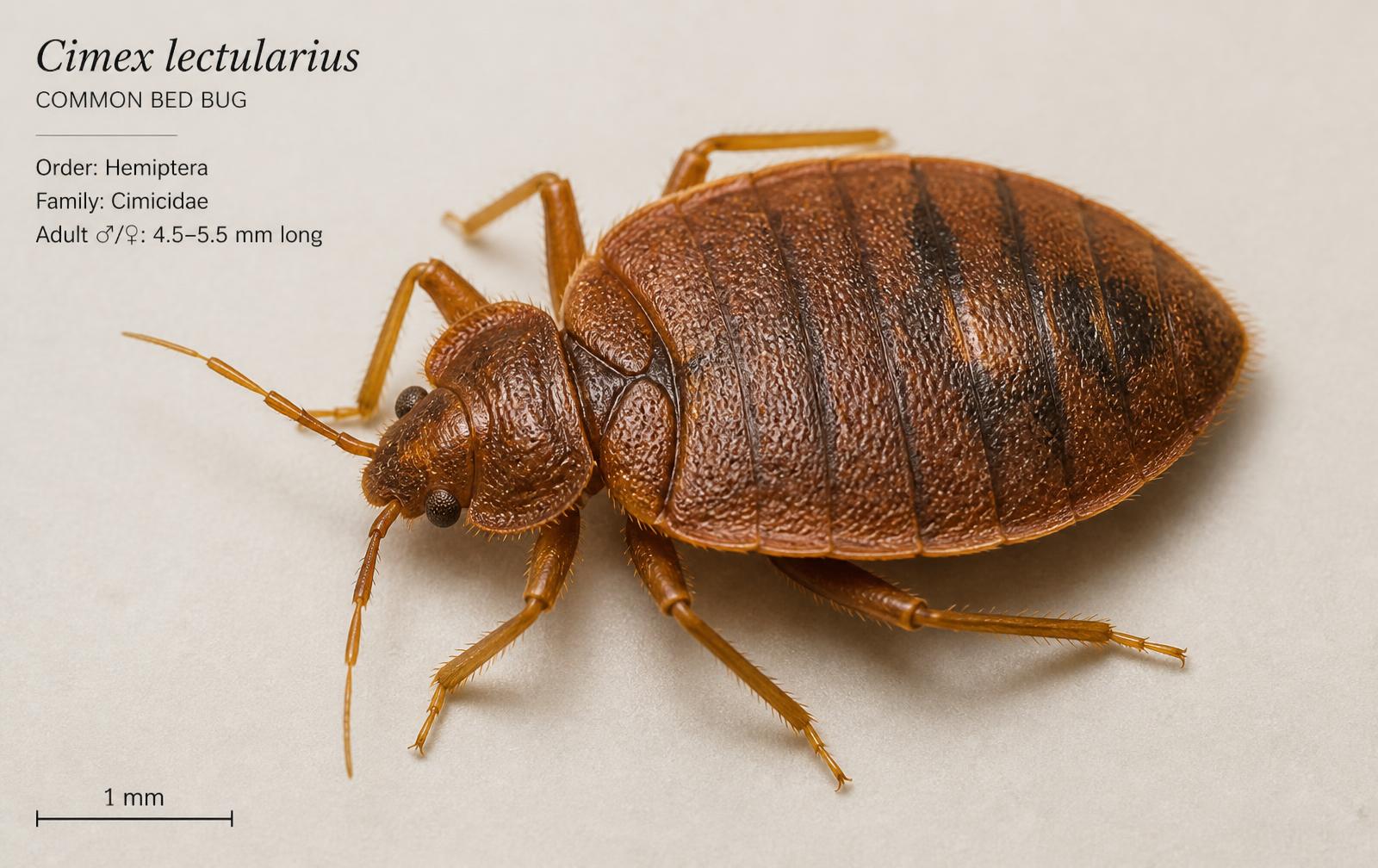
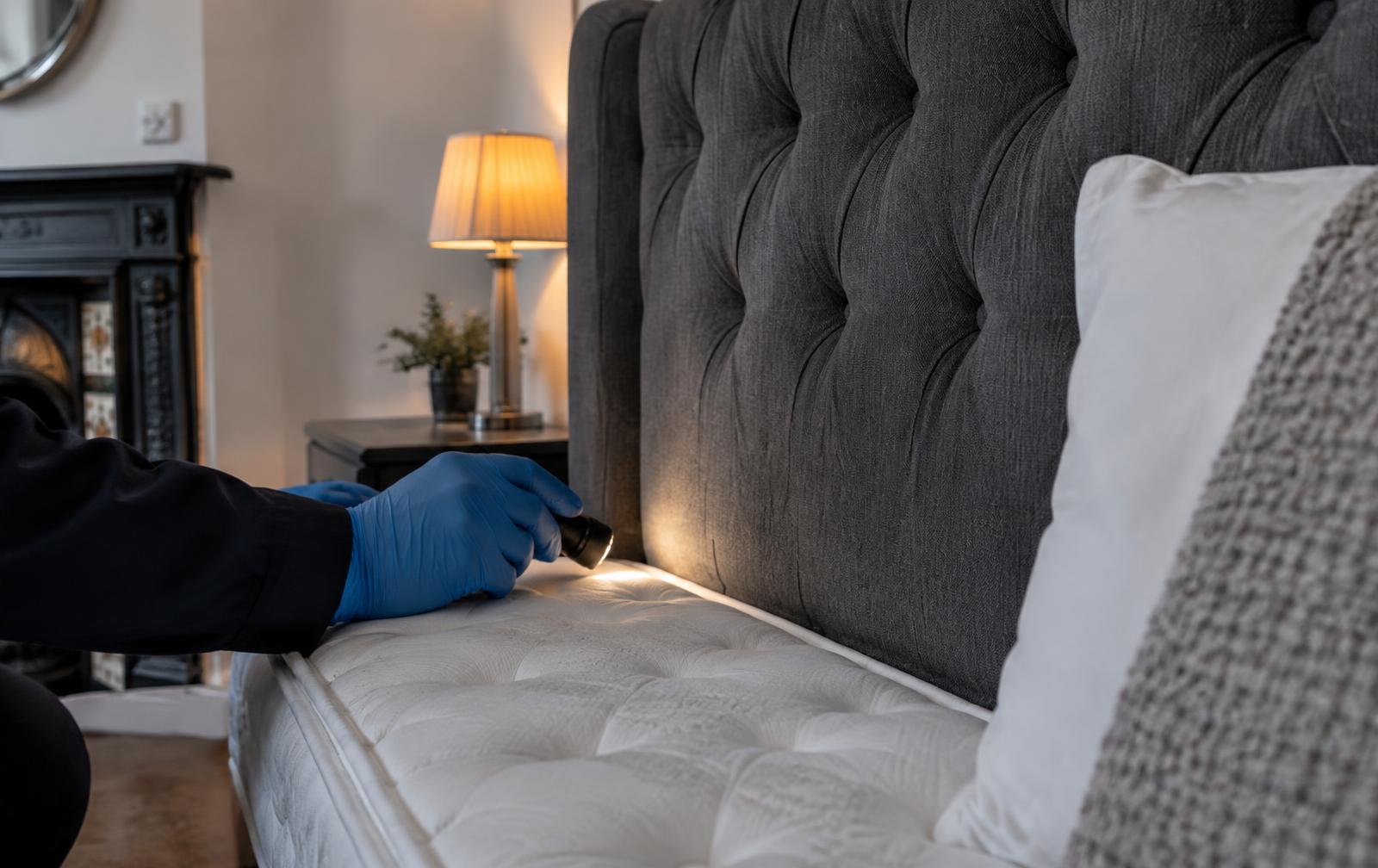
Bed bugs are small, flattened insects that feed on blood. They tend to stay close to places where people rest, which can include mattresses, bed frames, nearby furniture and narrow cracks or crevices around the sleeping area.
They are skilled at remaining unnoticed. Finding one possible sign does not always establish what is present, so it is important to look at the evidence as a whole.
Possible signs to look for
- A live or dead insect with the size, shape and features of a bed bug
- Small dark spotting around mattress seams, bed frames or nearby harbourages
- Cast skins left as immature bed bugs grow
- Eggs or eggshells in protected cracks and crevices
- Unexplained marks after sleeping, considered alongside physical evidence

How can bed bugs enter a home?
Bed bugs are accomplished hitchhikers. They can be carried between places in luggage, bags, clothing, bedding and furniture. Their arrival is not evidence that a property is dirty: even a clean, well-kept home can provide the hiding places and access to a host that they need.
Travel is one recognised route. A bed bug can hide in a case or bag after a hotel stay, a weekend away or a visit elsewhere. Second-hand furniture and belongings can also provide transport when they contain unnoticed insects or eggs.
If you have recently travelled and have a specific reason for concern, inspect luggage away from the bed, check seams, folds, pockets and zips, and keep any suspected item contained while you seek informed advice. Avoid moving belongings repeatedly between rooms, because unnecessary movement can make an inspection more difficult.
October travel
A Halloween horror story: bringing something home with you
October half-term often means hotels, weekend breaks and visits to relatives. The calendar itself does not make bed bugs more active, but travel can create opportunities for them to move with people and their belongings.
A brief, calm check when returning from a trip is more useful than treating everything as contaminated:
- 1Place luggage somewhere well lit and away from beds while you inspect it.
- 2Check seams, folds, pockets, handles and zips for physical evidence.
- 3Keep a clear photograph or safely contained specimen if you find a suspect insect.
- 4Ask a competent specialist to assess uncertain evidence before taking disruptive action.
Do not throw away a mattress or furniture solely because of unexplained marks or bites. Correct identification should come first.
Why Bed Bug Heat Experts UK uses heat
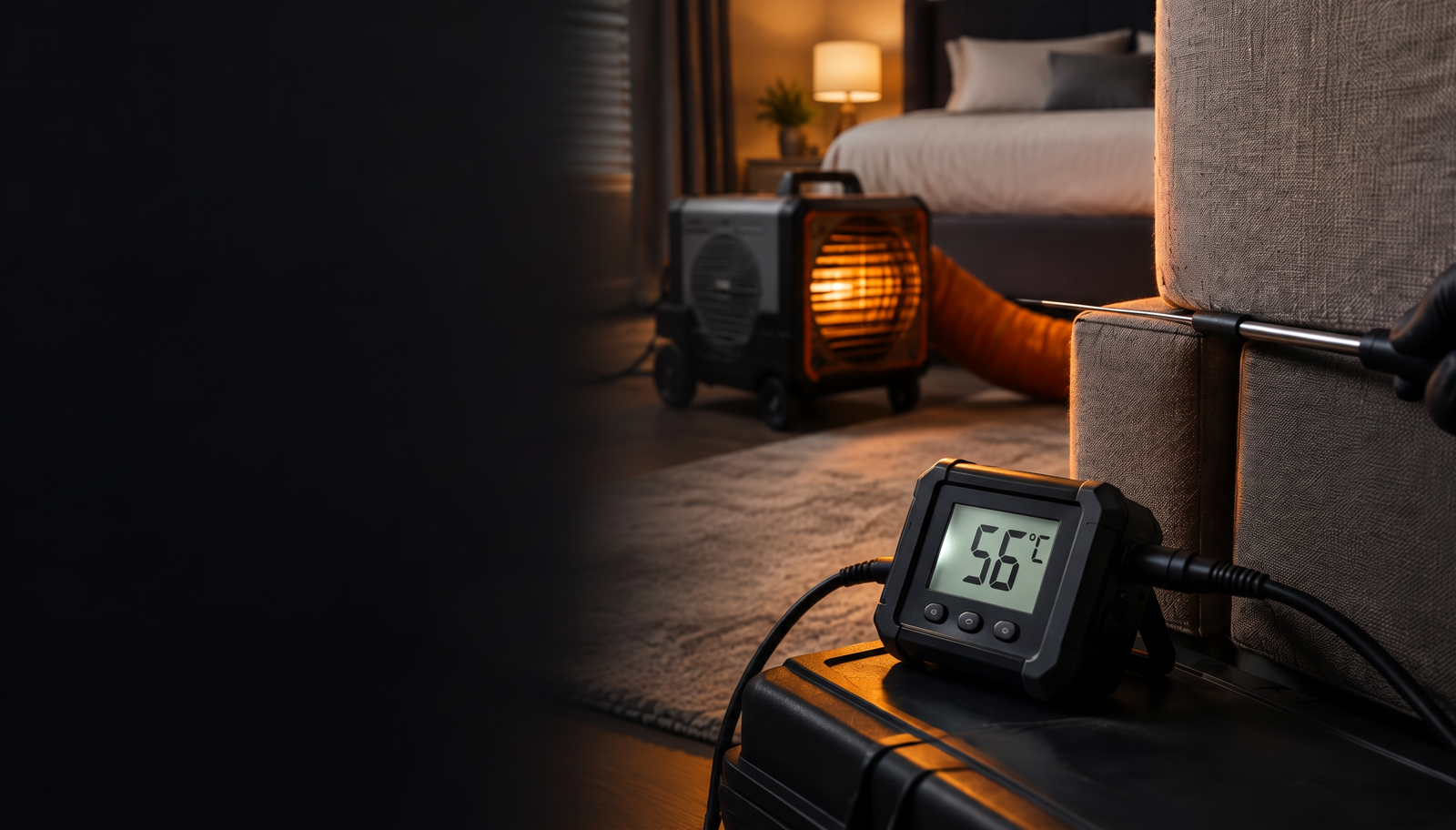
Bed bugs can occupy narrow harbourages around beds, furniture and the fabric of a room. Professionally delivered heat treatment is intended to expose insects hidden within the treated environment to lethal conditions, rather than relying only on treatment of visible surfaces.
Effective work depends on controlled heat distribution and measurement. Temperature readings from the treated environment help a technician assess conditions during the process; a single display reading or room-air figure is not proof of the outcome on its own. Our permanent guidance explains the method and its verification without reducing it to one number.
Heat treatment should be planned for the actual property and carried out with appropriate equipment and monitoring. Domestic fan heaters and improvised heating are not substitutes for a professional process and can create serious safety risks.
Think you have found a bed bug?
Do not panic, and do not immediately start throwing belongings away. If possible, capture the suspected insect without crushing it. A clear photograph can also be useful, although a photograph may not always be enough for a definite identification.
Record where and when it was found and avoid spraying unidentified products around the room. If the evidence is uncertain, the sensible next step is assessment — not an assumption based on a skin mark.

Keep Halloween scares where they belong
Ghosts, vampires and zombies belong in October. Bed bugs do not follow the calendar, and the best response is the same in every month: look for reliable physical evidence, avoid spreading belongings through the property and seek specialist advice when identification is uncertain.
If you are concerned about something found in a bedroom, Bed Bug Heat Experts UK can help assess the situation and explain the appropriate next step.
Common questions
- Are bed bugs more common in October?
- Bed bugs live indoors and can be encountered throughout the year. October and Halloween provide the theme for this article, not a claim that bed bugs have a particular autumn season.
- Can bites confirm that I have bed bugs?
- No. Skin reactions vary, some people show no visible reaction, and other insects or environmental causes can produce similar marks. Identification should consider physical evidence such as an insect, spotting, cast skins or eggs.
- Can a clean home get bed bugs?
- Yes. Bed bugs can be transported in luggage, bags, furniture and other belongings. Their presence is not evidence of poor hygiene.
Related Bed Bug Heat Experts UK guidance
References and sources
- NHS — Bedbugs(opens in a new tab)
- British Association of Dermatologists — Bedbugs patient information leaflet(opens in a new tab)
- US Environmental Protection Agency — How to Find Bed Bugs(opens in a new tab)
- US Environmental Protection Agency — Tips for Travel(opens in a new tab)
- Kells and Goblirsch — Temperature and Time Requirements for Controlling Bed Bugs under Commercial Heat Treatment Conditions(opens in a new tab)